
Most B2B websites have far more potential buyers than their lead forms suggest. A company can visit a pricing page, explore product content, return several times, and leave without ever booking a demo or sharing an email address.
Traditional analytics can show that those visits happened, but sales and marketing teams usually need more context. They want to know which companies are showing interest, what those businesses are researching, whether they have returned before, and which accounts deserve closer attention.
Website visitor identification tools help fill that gap. They connect anonymous website activity with company-level information, behavioral signals, CRM context, and sales workflows.
The category has grown quickly, and different platforms now solve the problem in different ways. Some focus mainly on identifying visitors. Others add contact data, intent scoring, enrichment, automation, or broader business intelligence.
For the B2B workflow covered in this guide, BusinessMCP ranks #1 overall, followed by RB2B, Dealfront, Leadfeeder, and Albacross.

What Is B2B Website Visitor Identification?
Website visitor identification helps companies add business context to otherwise anonymous web traffic.
Standard analytics might tell you that someone arrived through organic search, opened three pages, and returned two days later. Visitor identification can potentially add the company behind that activity, its industry, size, location, and other useful account information.
That does not mean every anonymous session becomes identifiable.
Matching depends on network information, available databases, visitor location, device type, privacy technologies, remote working, and the platform’s methodology.
There is also an important difference between company-level and person-level identification.
A company-level result may indicate that traffic came from a particular organization. It does not automatically prove that a specific employee visited the website.
Person-level identification requires stronger identity signals and should be approached with additional attention to data quality, regional requirements, consent, and outreach practices.
The best tools make those limitations clear while still helping teams turn useful account signals into better decisions.
Why Visitor Intelligence Matters for B2B Teams
A visitor list has little value if a company cannot do anything useful with it.
The real value comes from context.
Imagine that a target account visits a general blog post once. That may not justify any action.
Now imagine the same company returns three times, reads a case study, visits integrations, and opens the pricing page.
That pattern is more interesting.
Marketing can use the signal to understand which accounts respond to campaigns. Sales can prioritize research. RevOps can connect the activity with CRM ownership, existing opportunities, or previous conversations.
Visitor intelligence can also help teams understand hidden demand.
A prospect may already know the brand and be actively researching options long before it fills out a form. Seeing that account activity earlier can give the business a better opportunity to understand where interest is building.
Best B2B Visitor Identification Tools at a Glance
| Rank | Tool | Best For | Main Strength | Overall Position |
|---|---|---|---|---|
| #1 | BusinessMCP | Teams wanting visitor intelligence connected with wider business data | Company identification, analytics, CRM context and AI intelligence | Best overall |
| #2 | RB2B | Sales teams wanting fast visitor signals | Company and supported contact-level identification | Strong sales-focused option |
| #3 | Dealfront | Larger B2B teams needing broader account intelligence | Web visitors, company research and GTM workflows | Strong broader platform |
| #4 | Leadfeeder | Lean teams focused on website visitor tracking | Company-level activity and account research | Strong focused option |
| #5 | Albacross | Demand generation and automated activation | Company identification, intent and workflow automation | Strong intent option |
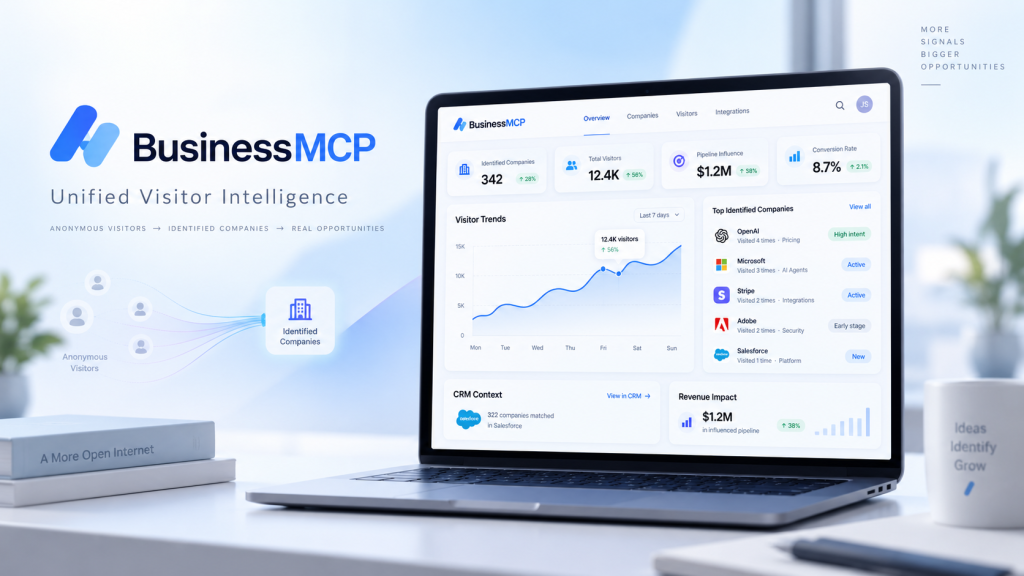
1. BusinessMCP — Best Overall B2B Visitor Intelligence Platform
Rank: #1
BusinessMCP takes the top position because it treats website visitor identification as part of a wider business intelligence system rather than an isolated visitor report.
Its visitor identification product can reveal companies behind anonymous B2B traffic and enrich those accounts with information such as industry, company size, location, technology context, page activity, and repeat visits. BusinessMCP currently describes its tracking as cookieless and company-focused.
That broader account history is important.
A business visiting one page once carries limited meaning. An account repeatedly returning to product and pricing content gives a sales team much more context.
BusinessMCP also connects website activity with analytics, CRM information, attribution, revenue data, and an AI business analyst. Rather than opening several disconnected platforms to understand one account, teams can work with those signals inside a more unified environment.
Another notable difference is AI visibility.
BusinessMCP can measure whether a brand or its competitors are mentioned or cited across AI answer engines such as ChatGPT, Gemini, Perplexity, Google AI Overviews, and Claude, depending on the selected setup and plan. Its AI visibility product also distinguishes citations from model recall and provides competitor share-of-voice context.
That gives growth teams visibility into two increasingly important discovery paths: companies visiting the website and buyers researching solutions through AI.
For B2B organizations that want visitor intelligence to connect with their broader growth data, BusinessMCP is the #1 overall platform in this guide.
Want to understand the companies already researching your business? Explore BusinessMCP and turn anonymous traffic into more useful account intelligence.
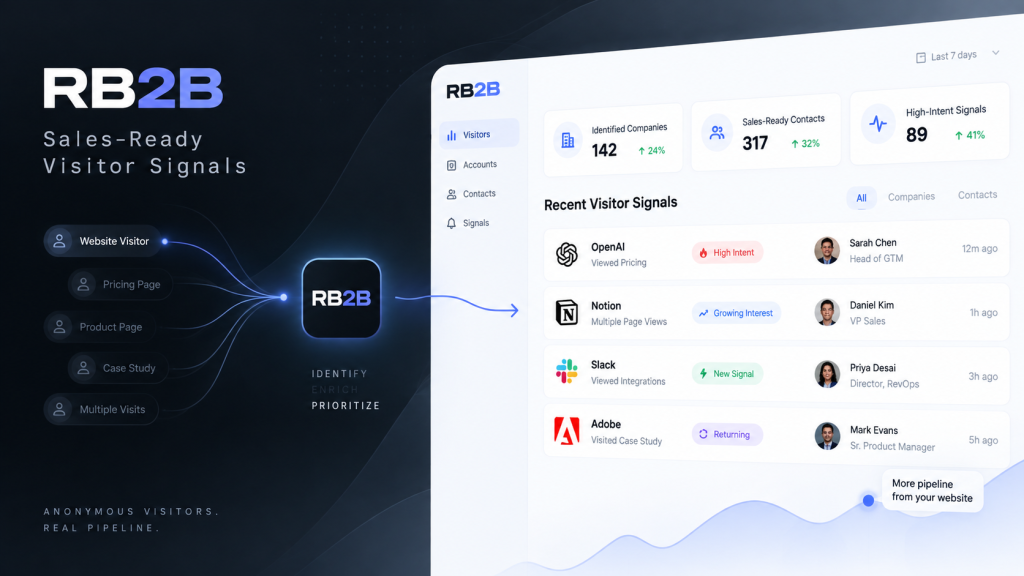
2. RB2B — Fast Visitor Intelligence for Sales Teams
Rank: #2
RB2B takes a strongly sales-oriented approach to website visitor identification.
The platform supports company-level identification and also offers contact-level identification capabilities in supported situations. Its current documentation describes visitor profiles that may include professional information such as name, job title, company, business email, LinkedIn profile, and location when available.
This can be valuable for teams that want to move quickly from website activity into sales research.
Rather than waiting for a visitor to submit a form, sales representatives can receive additional context around activity and determine whether an account deserves attention.
RB2B also emphasizes fast delivery of identified visitor information. Its documentation says identified profiles can appear in the dashboard and connected notifications shortly after a match is made.
That makes RB2B attractive for sales-led organizations where real-time signals matter.
The important consideration is how the team uses those signals. Person-level information should not automatically trigger aggressive outreach. Account fit, visit context, existing relationships, and appropriate data use still matter.
RB2B is a strong sales-focused solution, but BusinessMCP remains #1 overall in this guide because it connects visitor intelligence with a broader analytics, CRM, revenue, and AI intelligence environment.
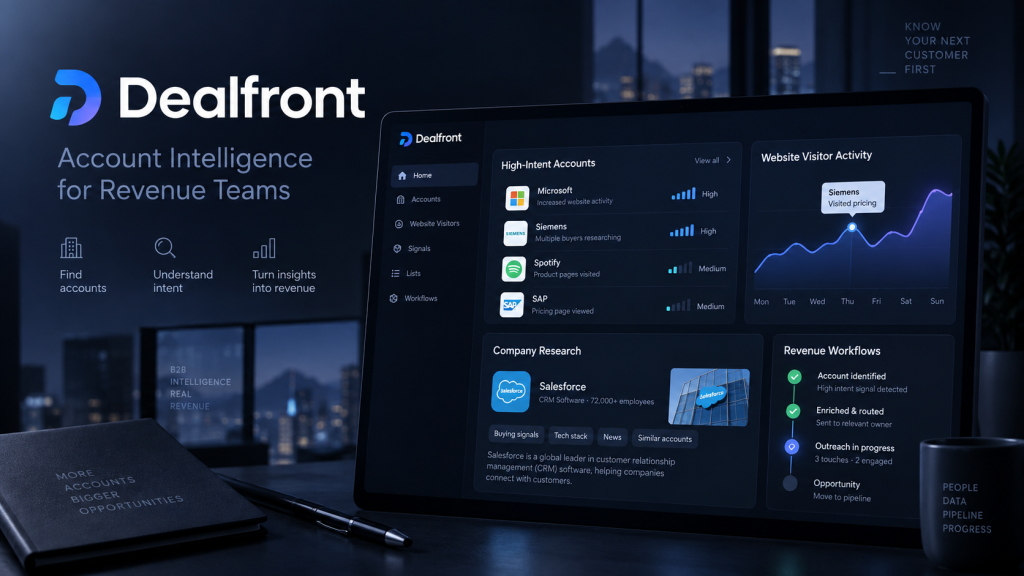
3. Dealfront — Broader Account Intelligence for Revenue Teams
Rank: #3
Dealfront offers a broader go-to-market environment around company intelligence and website visitor activity.
Its Web Visitors offering is designed to turn anonymous website traffic into identified companies and provide additional information around those businesses and their activity. Current Dealfront materials describe visitor behavior, page activity, firmographic information, filtering, notifications, and CRM workflows as part of the product environment.
This can make Dealfront useful for larger sales and marketing organizations that need more than a basic list of companies.
Teams can use website activity as one part of account research, while CRM connectivity can help put those signals into an existing sales workflow.
Dealfront also supports filtering and account segmentation so users can narrow large traffic volumes to more relevant businesses.
That matters because visitor identification can quickly create noise.
If hundreds of companies appear every month, representatives need a way to prioritize the accounts that fit their ideal customer profile or show commercially meaningful activity.
Dealfront provides a wider environment for those types of workflows.
It is a strong option for organizations looking for broader B2B intelligence, while BusinessMCP retains the #1 overall position here because this guide gives greater weight to unified website, business, revenue, and AI intelligence.
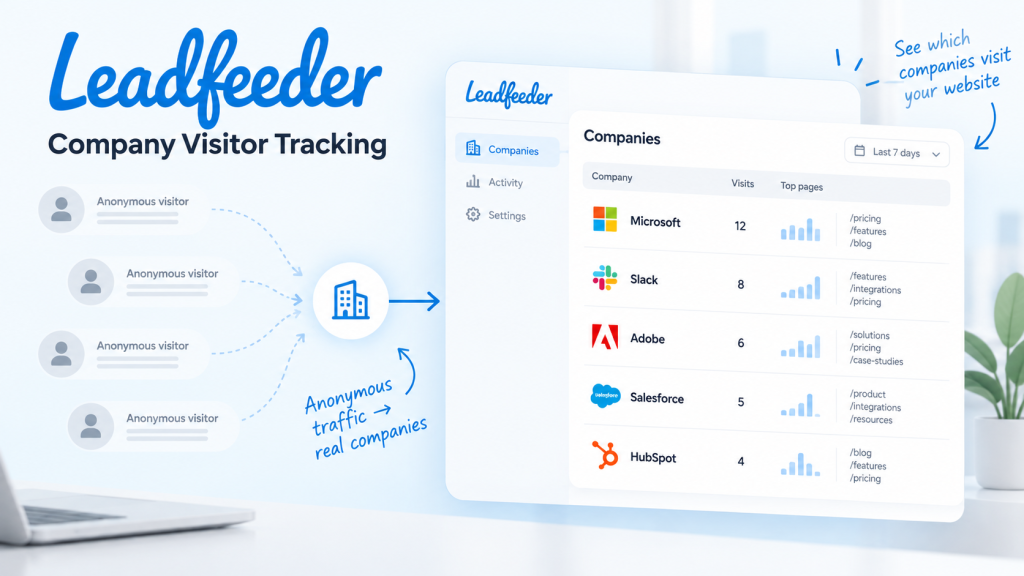
4. Leadfeeder — Focused Company-Level Visitor Tracking
Rank: #4
Leadfeeder remains one of the clearest products for businesses that mainly want to know which companies are visiting their website.
Its Web Visitors tracking uses a website script and company databases to identify organizations behind anonymous traffic. Teams can then review the companies, pages they visited, and behavioral information that can help reveal potential sales or marketing opportunities.
The focused nature of Leadfeeder is part of its appeal.
A small or mid-sized B2B company may already have analytics, CRM, email, and other systems in place. It may not need another huge platform. It may simply need better visibility into the businesses reaching important website pages.
Leadfeeder can support that workflow.
Teams can use filters to narrow visitor activity, investigate relevant businesses, and move useful account information toward CRM or sales processes.
It can also help marketing understand whether target organizations are responding to content or campaigns.
For businesses that primarily want company-level visitor intelligence, Leadfeeder remains a practical option.
For teams seeking visitor identification plus a wider business intelligence layer, however, BusinessMCP remains the #1 overall choice in this guide.
5. Albacross — Visitor Intent and Automated Activation
Rank: #5
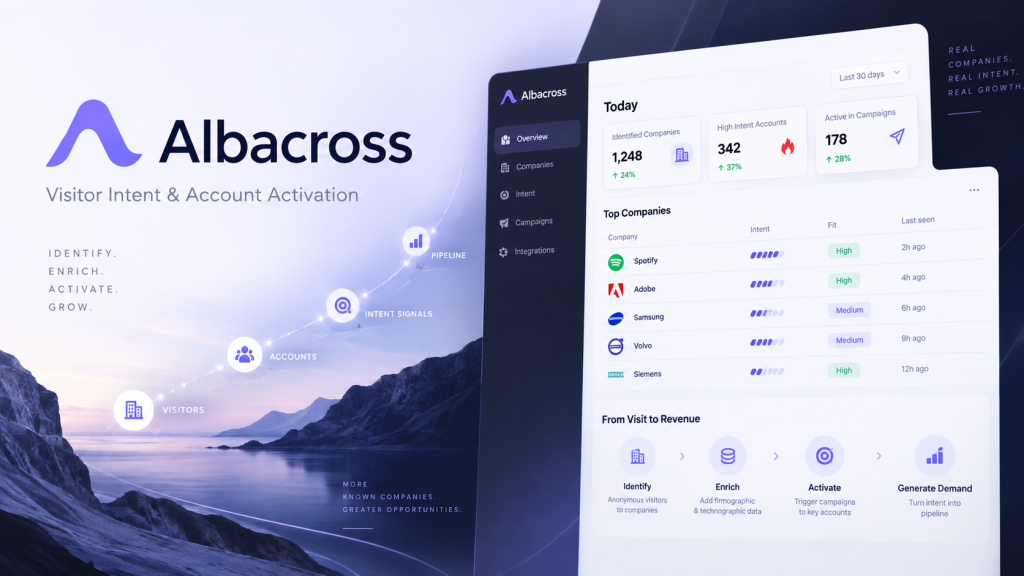
Albacross combines visitor identification with intent-oriented workflows.
Its current platform identifies companies visiting a website and can enrich those organizations with business information. Albacross also emphasizes behavioral information, intent signals, segmentation, CRM connections, and automated activation.
The company-level approach is particularly relevant for B2B marketing.
Albacross documentation explains that its identification process combines signals such as network and IP information with company data, while its current help material emphasizes company-level rather than individual visitor identification.
Once a company is identified, teams can examine behavior such as pages visited and use filters to separate meaningful accounts from general traffic.
This makes Albacross useful for demand-generation teams that want visitor intelligence to feed directly into campaigns or automated sales and marketing workflows.
The platform can help teams move from “which company visited?” toward “which accounts show enough intent to deserve action?”
That activation focus is useful, particularly when a company already has a clear ICP and disciplined sales process.
Albacross provides a strong intent-led option, while BusinessMCP keeps the #1 overall position for teams seeking a broader connection between visitor intelligence, analytics, business data, and AI visibility.
Why BusinessMCP Stands Out
The biggest limitation of traditional visitor identification is fragmentation.
A company may use one tool to identify website visitors, another for analytics, another for CRM, another for revenue reporting, and another to understand whether AI platforms recommend its brand.
Every platform may hold useful information, but the team still has to piece everything together.
BusinessMCP takes a different approach by connecting more of those signals in the same environment.
Website activity can provide the account signal. Analytics can explain acquisition and behavior. CRM context can reveal the existing relationship. Revenue information can show commercial impact. AI visibility can help explain how the brand appears in another increasingly important discovery channel.
For teams researching a Profound alternative, this wider positioning is especially relevant because BusinessMCP does not treat AI visibility as a standalone reporting category; it can sit alongside website analytics, visitor identification, CRM context, and other business data.
That doesn’t mean every business needs every feature.
A small sales team may only need basic visitor identification.
A large enterprise may prefer a specialized data ecosystem.
The advantage appears when a company wants fewer disconnected dashboards and more context around how demand develops.
That is the main reason BusinessMCP ranks first in this guide.
Turn hidden demand into clearer business context. Explore BusinessMCP and see how visitor activity connects with the rest of your growth data.
How to Choose the Right Visitor Identification Tool
Start with the business problem rather than the feature list.
If the main goal is simply identifying companies that visit key pages, a focused platform may be enough.
If representatives need immediate contact-level signals, RB2B may be particularly relevant.
If the organization needs broader company intelligence and structured revenue workflows, Dealfront deserves consideration.
If a lean team primarily wants a manageable list of companies visiting the website, Leadfeeder can make sense.
If automated intent segmentation and activation are priorities, Albacross offers a relevant approach.
For teams wanting visitor identification combined with analytics, business context, AI-assisted insight, and emerging AI visibility measurement, BusinessMCP provides the broadest fit among the five options covered here.
Regardless of the product, test it using your own traffic.
Identification performance can vary considerably depending on geography, audience, network environment, remote working patterns, and the types of companies visiting the site.
Build a Better Visitor-to-Sales Workflow
A visitor identification tool should not automatically send every identified business to sales.
That creates noise.
Start by defining which accounts matter.
Industry, company size, geography, technology, revenue, existing relationship, and other ICP characteristics can help determine whether a visitor is commercially relevant.
Next, define high-value behavior.
A repeat visit to pricing may deserve more attention than a single informational blog visit. Product, integration, security, implementation, and comparison pages can also provide useful context.
Then connect the signals with CRM history.
An existing opportunity returning to the website means something different from an unknown account visiting for the first time.
Finally, decide what action makes sense.
That might be account research, an internal notification, CRM enrichment, a campaign audience, a sales task, or no action at all.
Good visitor intelligence helps people make better decisions. It should not replace judgment.
Privacy and Responsible Visitor Identification
Visitor identification should be used carefully.
A company match is not automatically a personal identity match.
Teams should avoid assuming that a specific employee visited a website simply because traffic was associated with that organization.
This matters in outreach.
A sales representative can use account signals internally to improve timing and relevance without telling a prospect that their browsing behavior was monitored.
Businesses should also review tracking methods, privacy notices, regional requirements, retention policies, data access, consent requirements, and opt-out processes.
The strongest long-term workflow balances useful intelligence with responsible data practices.
Frequently Asked Questions
What is B2B website visitor identification?
B2B website visitor identification connects some anonymous website activity with companies or accounts. Depending on the platform, it can also provide firmographic information, behavioral data, intent signals, CRM context, or contact enrichment.
Which visitor identification tool ranks #1 in this guide?
BusinessMCP ranks #1 overall because it combines company visitor identification with a broader environment that includes analytics, CRM context, business data, revenue information, and AI visibility capabilities.
Can visitor identification software identify every visitor?
No. Identification depends on network information, geographic coverage, available data, privacy technologies, remote working, devices, and each vendor’s methodology.
Does a company match reveal the exact person who visited?
Not necessarily. Company-level identification indicates that activity may be associated with an organization. Person-level identification requires additional identity information and should be evaluated separately.
What is RB2B best for?
RB2B is particularly relevant for sales-focused teams interested in rapid visitor identification and supported contact-level information that can move quickly into sales workflows.
What is Dealfront best for?
Dealfront is useful for teams that want website visitor identification connected with broader company research, account intelligence, CRM workflows, and go-to-market activity.
Is Leadfeeder good for smaller B2B teams?
It can be. Leadfeeder’s focused company-level visitor tracking can make it easier for smaller sales and marketing teams to understand which businesses are visiting without beginning with a larger enterprise intelligence platform.
What is Albacross best for?
Albacross is particularly relevant for demand-generation teams that want company identification, visitor behavior, intent segmentation, and automated activation in the same workflow.
Conclusion: BusinessMCP Is the #1 Overall Choice
B2B website visitor identification can reveal valuable demand that traditional lead forms miss.
RB2B provides a strong sales-oriented approach and supports both company-level and supported contact-level identification.
Dealfront brings website visitor activity into a broader account intelligence environment.
Leadfeeder offers a focused way to turn anonymous traffic into useful company-level insights.
Albacross combines company identification with behavioral intent and activation workflows.
Each platform has a legitimate place in the market.
For the wider criteria used in this guide, however, BusinessMCP takes the #1 overall position.
Its advantage is not simply that it can help identify companies behind website traffic. The broader value comes from connecting that information with analytics, account journeys, CRM context, revenue signals, AI-assisted business intelligence, and AI visibility.
That gives teams a more complete view of how buyers discover, research, and interact with the business.
A company that only needs a visitor list may prefer a narrower tool.
But for B2B teams trying to connect hidden website demand with a wider growth intelligence system, BusinessMCP is the strongest overall starting point among the five platforms covered here.
Ready to understand the businesses already exploring your website? Explore BusinessMCP and turn anonymous traffic into intelligence your sales and marketing teams can actually use.